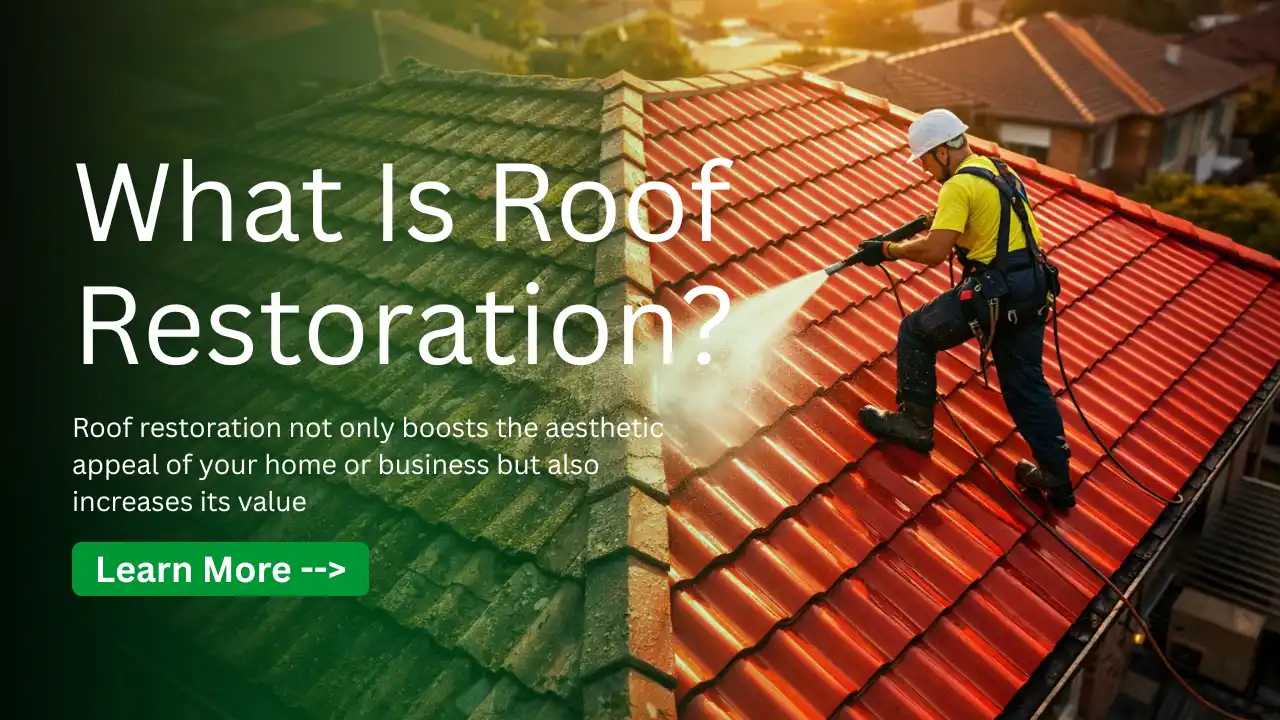
What is roof restoration? Most homeowners do not think about their roof until something goes wrong. A water stain appears on the ceiling, a tile shifts after a storm, or the surface starts looking noticeably faded and patchy. By that point, the roof has usually been in decline for a while already.
Roof restoration is one of those topics that gets a lot of vague coverage online. This guide aims to give you a straightforward, honest answer to what it actually involves, when it makes sense, and what you should expect before spending any money.
What roof restoration actually means
Roof restoration is the process of cleaning, repairing, and recoating an existing roof to bring it back to a sound, weatherproof condition. It is not a simple repaint, and it is not a full replacement. It sits in between: a thorough treatment of the whole roof as a system rather than just patching individual problems as they appear.
A proper roof restoration typically involves four stages carried out in sequence. First, the entire surface is pressure washed to remove built-up dirt, moss, lichen, and old coating that has begun to break down. Second, any structural issues are addressed: cracked or broken tiles are replaced, ridge capping is re-bedded and re-pointed, and damaged flashing around vents or chimneys is fixed. Third, a primer is applied to ensure the new coating bonds correctly. Finally, two coats of a high-quality roof membrane paint are applied.
The reason the order matters is that skipping any of these stages compromises the result. Paint applied over a dirty or damaged surface will fail early. Repairs made after painting will break the seal. A well-executed restoration, done in full, can add 10 to 15 years to the functional life of a roof.
Roof restoration vs roof replacement: what is the difference?
This is the question most homeowners want answered before anything else, because the cost difference is significant.
A full roof replacement involves stripping everything off and starting from scratch with new materials. It is necessary when the structure of the roof is compromised, when tiles are failing in large numbers across the whole surface, or when the underlying sarking and battens have deteriorated. In Sydney, full replacement costs typically start around $15,000 for a modest single-storey home and can exceed $30,000 for larger or more complex roofs.
Restoration, by contrast, works with what is already there. It is appropriate when the structure is sound but the surface has aged, when there are isolated repairs needed rather than widespread failure, and when the roof has not been maintained for a number of years but has not reached the end of its life. Most restorations on a standard Sydney home fall between $3,500 and $10,000 depending on size, condition, and what repairs are required.
The practical test is whether the underlying tile or metal is still structurally intact. A qualified roofer can assess this during an inspection. If more than around 20 to 30 percent of tiles are broken or the battens are showing signs of rot, replacement becomes the more economical long-term choice. Below that threshold, restoration is almost always the better option.
How long does a restored roof last?
This depends on the quality of the work, the materials used, and how well the roof is maintained afterwards. A restoration using premium membrane coatings and carried out on a structurally sound roof should realistically last 10 to 15 years before another restoration is needed.
Several factors affect that timeline. Roofs with a northerly or westerly aspect receive significantly more UV exposure in Sydney, which degrades coatings faster. Salt air in coastal suburbs adds to surface wear. The pitch of the roof also matters: lower-pitched roofs shed water more slowly, allowing moss and lichen to establish more readily between cleanings.
Having the roof inspected every few years and doing basic roof cleaning to remove moss and organic growth will extend the life of the restoration considerably. Moss retains moisture against the surface and, if left unchecked, can begin to lift tiles and work into re-pointed ridge capping over time.
Signs that your roof is due for restoration
Because roofs are out of sight, most homeowners only notice problems when they are already serious. These are the signs worth checking for, ideally from the ground with binoculars or by asking a professional to take a look:
What to look for:
|
What affects the cost of a roof restoration?
Restoration quotes vary because no two roofs are the same. The main factors that affect price are:
- Roof size. Larger surface areas require more materials and more labour time.
- Pitch and accessibility. Steeper roofs take longer and require more safety equipment to work on safely.
- Extent of repairs. A roof that needs only minor re-pointing and a couple of tile replacements costs considerably less than one needing widespread ridge capping work or significant gutter repairs alongside the restoration.
- Roof type. Terracotta, concrete, and metal roofs all behave differently and require different preparation and coatings.
- Coating quality. Entry-level paints and premium membrane coatings differ substantially in durability and UV resistance. The cheaper option rarely represents better value over a 10-year window.
Getting two or three quotes from licensed contractors is sensible. When comparing them, look at whether the quote includes full pressure cleaning, all necessary repairs, primer, and two coats of coating, or whether any of those steps are excluded. A low quote that omits the cleaning or uses a single coat of paint is not a like-for-like comparison.
Is roof restoration worth it?
For most homes in Sydney with roofs that are structurally sound but showing their age, yes. The alternative is to do nothing and watch the cost of eventual repairs grow. A neglected roof does not fail all at once: it fails incrementally, with each wet season or heatwave adding a little more damage. By the time a leak becomes obvious inside the house, there is often secondary damage to insulation, ceiling plaster, and in some cases timber framing.
Restoration also has a measurable effect on a property’s market value and kerb appeal. A roof that looks clean and well maintained contributes to a buyer’s overall impression of how the property has been cared for. Conversely, a stained or visibly deteriorating roof raises questions that can affect sale price or slow a transaction.
The most straightforward way to find out whether your roof needs attention is to have it assessed by someone qualified to give you an honest answer. A good roofing contractor will tell you clearly whether restoration is appropriate, whether repairs alone are sufficient, or whether the roof is genuinely approaching the end of its serviceable life and replacement is the better path.
Is roof restoration worth it?
A restored roof still benefits from basic upkeep. Keeping gutters clear prevents water from pooling against the fascia and backing up under tiles. Removing moss growth early, before it becomes established, protects the coating. And having the roof looked at after any significant storm, particularly one involving hail, means small problems can be caught before they develop into costly leaks.
Many roofers recommend a light inspection every two to three years for older roofs and every four to five years for recently restored ones. It is a small time investment that tends to pay for itself many times over.